Planner’s Perspective: What Signage Do You Need for Your Wedding Day?
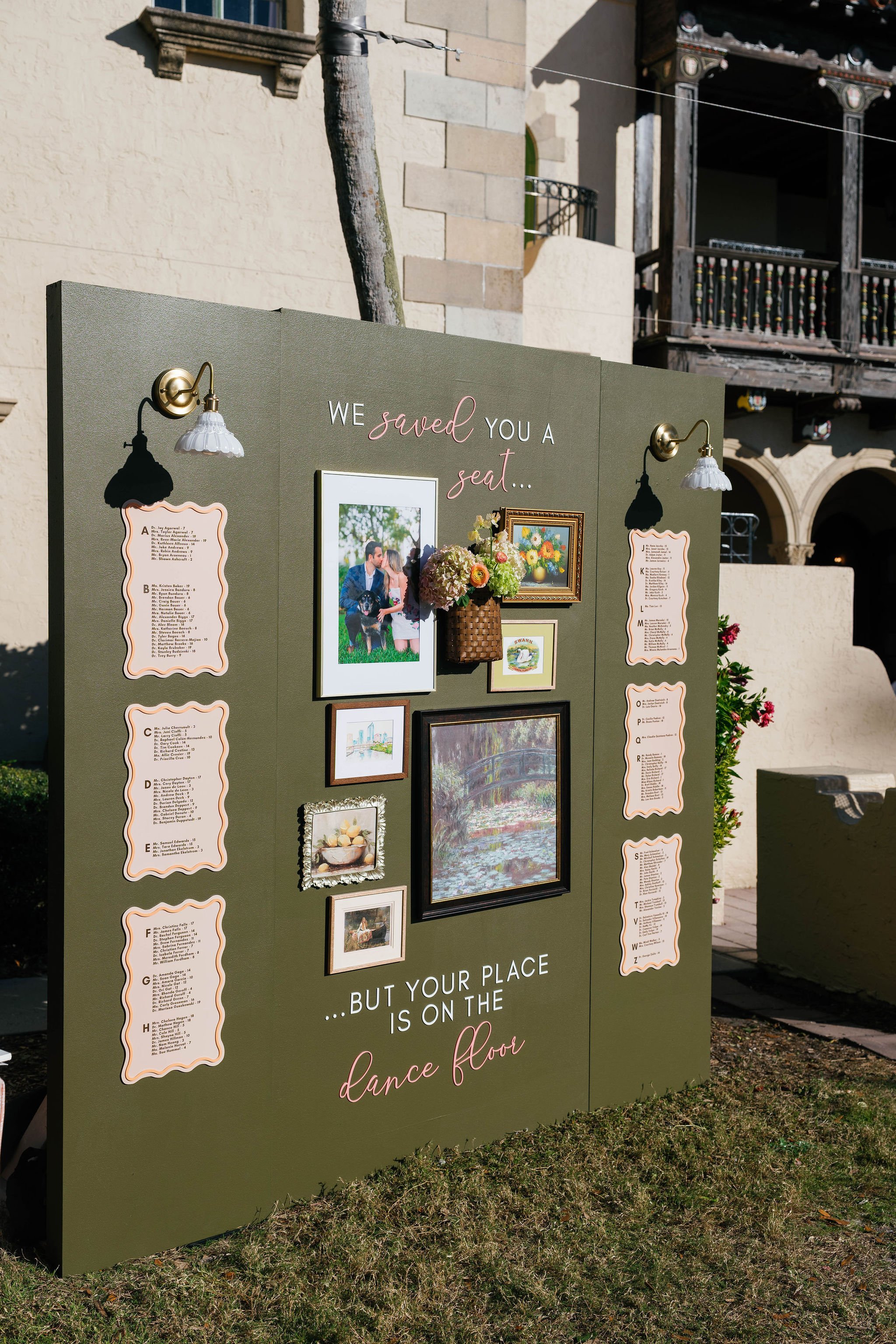
Wedding day signage is much more than a decorative detail—it plays an important role in guiding guests, enhancing the overall design, and creating a seamless experience from start to finish. Thoughtfully selected signage helps answer guests' questions before they even have to ask them, keeping the day organized while complementing your wedding aesthetic. From the moment guests arrive through the final course of dinner, each sign serves a unique purpose while adding another layer of personalization to your celebration. Whether you're planning an intimate gathering or a large-scale event, investing in the right signage can elevate both the guest experience and your wedding design. Here's a breakdown of the most common wedding day signage pieces and why each one deserves a place in your celebration.
Seating Chart Installations
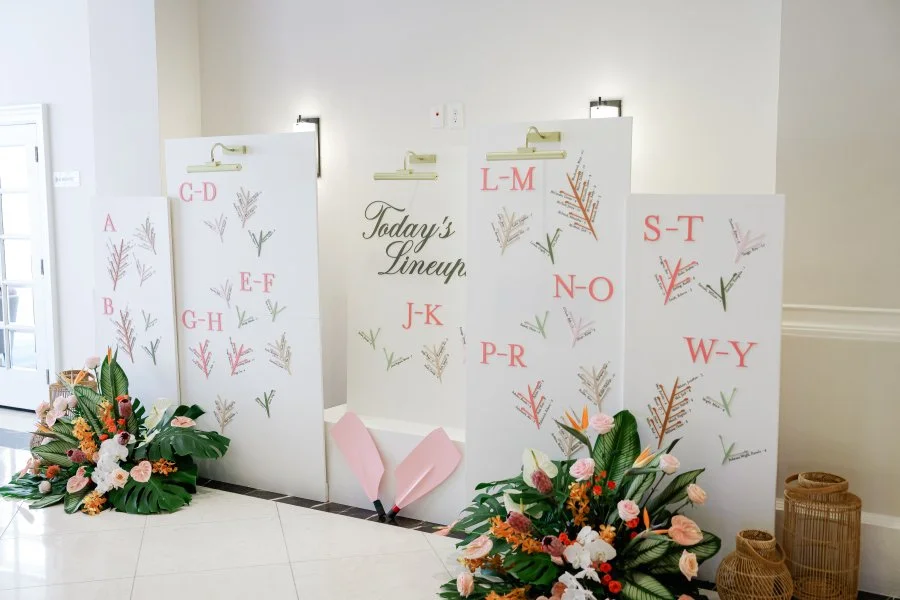
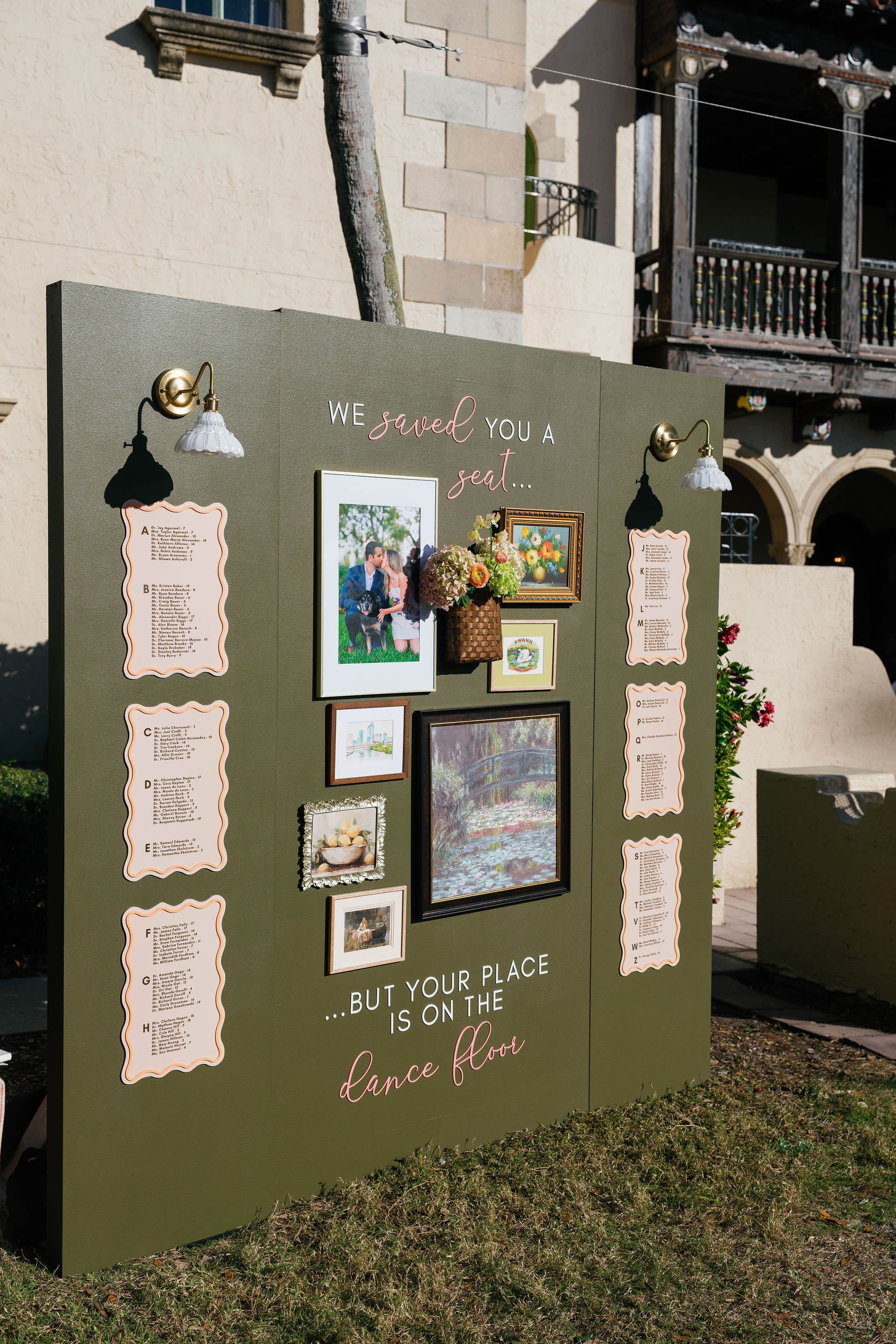
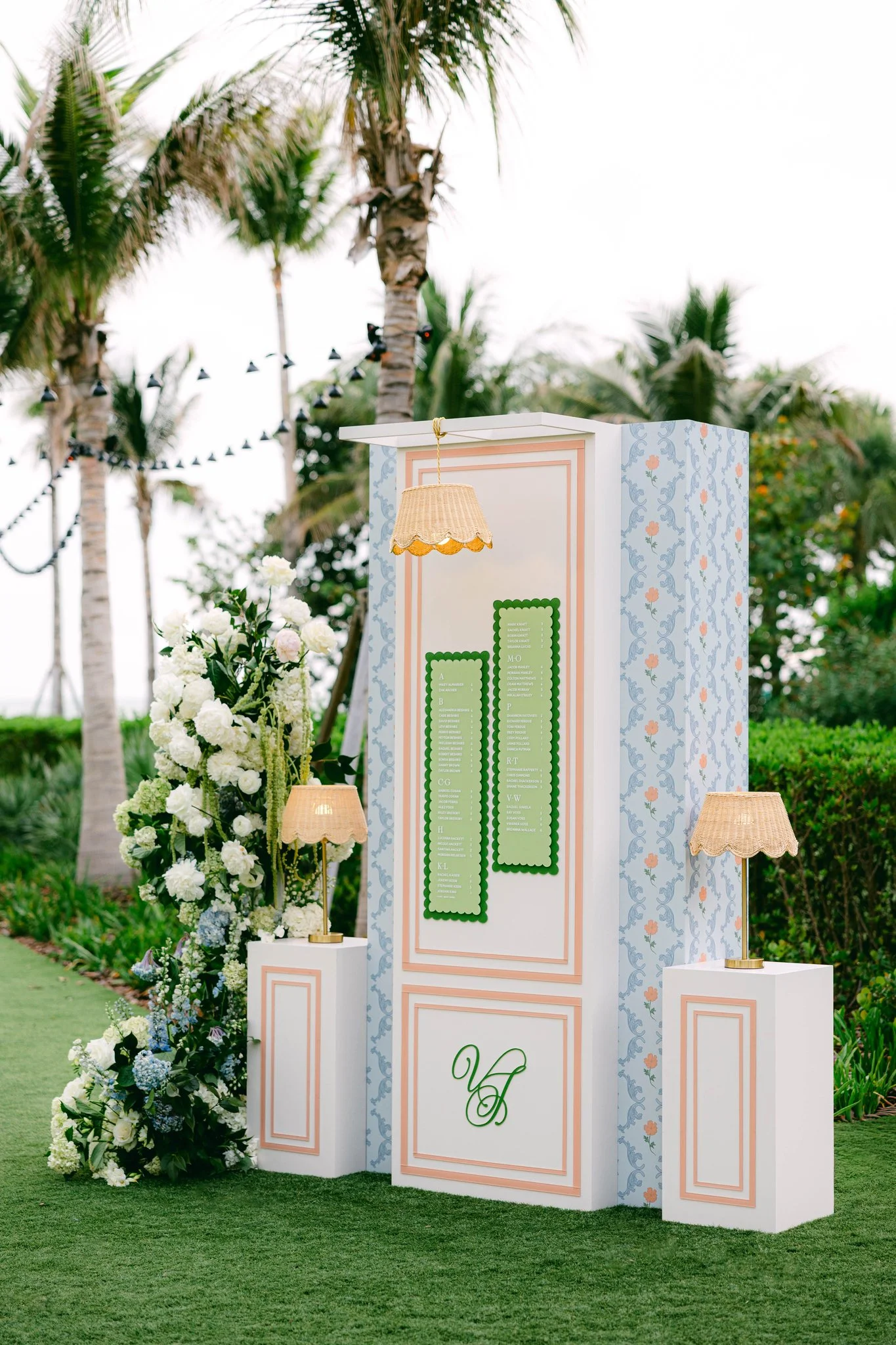
A seating chart installation is one of the most important pieces of wedding day signage because it directs guests to their assigned dinner table before they enter the Reception. Rather than searching for their names at individual tables, guests can quickly locate their table assignment in one central location, helping dinner begin efficiently. Seating charts also provide an opportunity to make a major design statement, whether through custom-built displays, floral installations, mirrors, acrylic panels, fabric backdrops, or unique architectural elements. Since this piece is often one of the first things guests see during Cocktail Hour, it naturally becomes both a functional guide and a focal point for photos. Couples who want to create a memorable first impression often choose to invest in a custom seating chart installation that reflects the overall style of their wedding. Because seating charts list only table assignments—not specific seats—they work best for receptions with open seating at each table.
Escort Card Installations
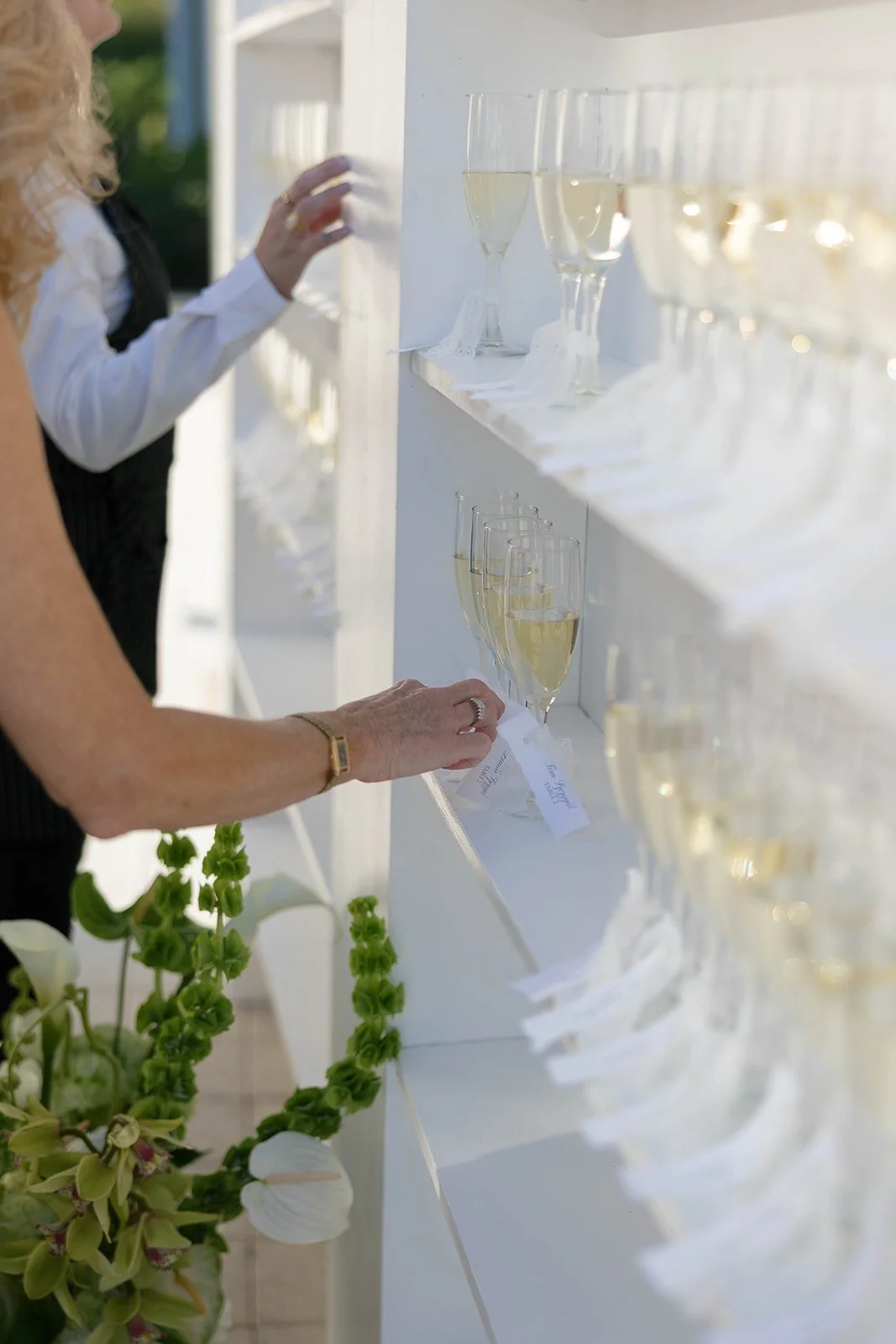
Escort card installations serve a similar purpose as a seating chart but offer guests an individual card instead of a shared display. Each guest finds their personalized escort card, which directs them to their assigned table before entering the Reception. Escort cards are ideal when couples want to incorporate favors, personalized gifts, or interactive displays, as each card can be paired with an item such as champagne, a drink, a candle, or another keepsake. They also offer greater flexibility because cards can be rearranged more easily if last-minute seating changes occur. Unlike a seating chart, escort cards can create a more interactive guest experience while adding another personalized design element to the Cocktail Hour space. If each escort card also includes a specific seat number, they can even guide guests directly to their assigned seat.
Bar Signage
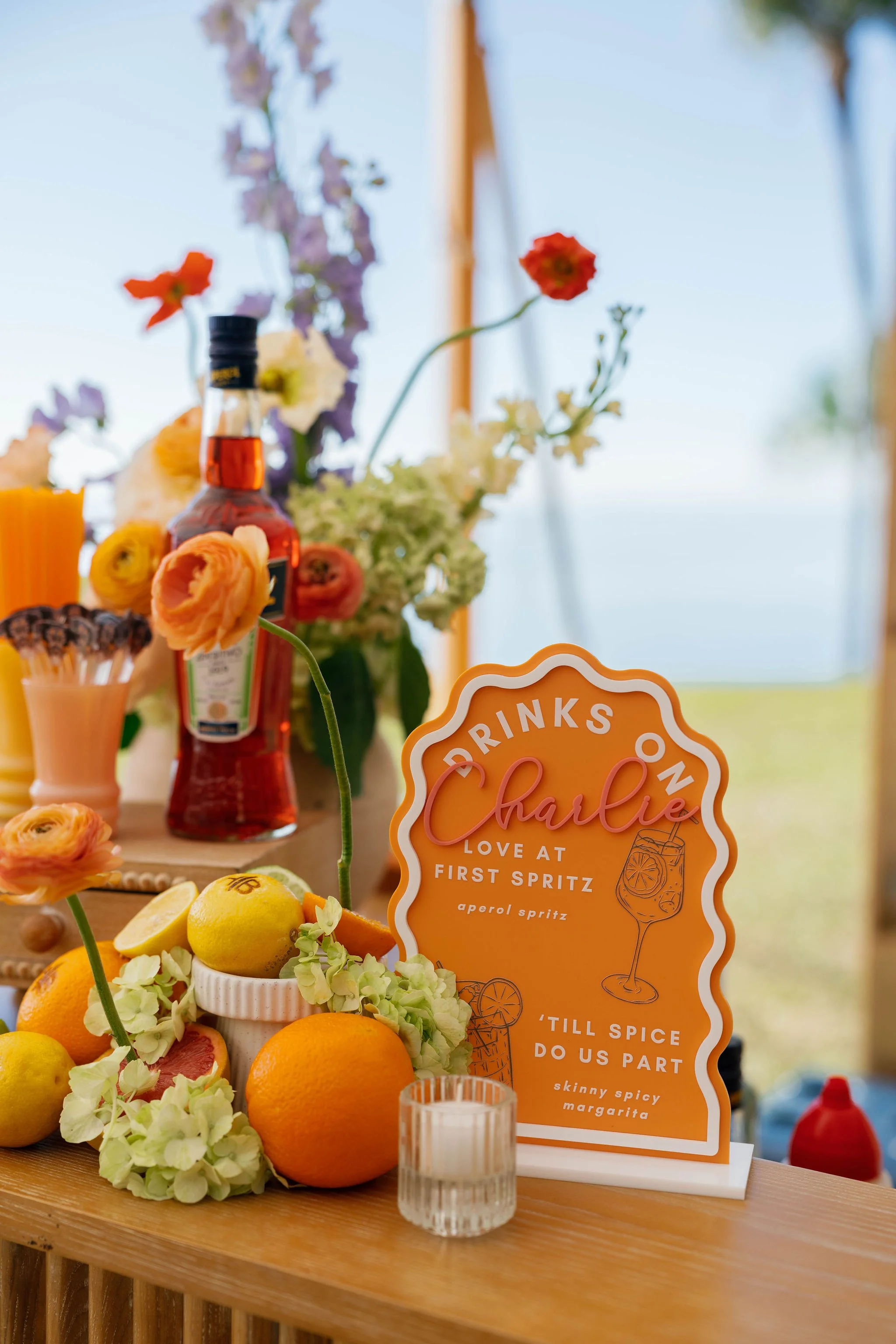
Bar signage helps guests quickly identify beverage options while reducing congestion at the bar. Whether you're serving signature cocktails, beer and wine, a full open bar, or a specialty drink station, a beautifully designed sign lets guests know what's available before they order. Couples often use bar signs to showcase signature cocktails inspired by their personalities, pets, favorite vacations, or meaningful memories, making the bar feel more personal. Including ingredients on cocktail signs is especially helpful for guests with dietary restrictions or allergies. Coordinating the bar signage with the rest of your stationery suite also creates a cohesive design throughout the Reception. While bar signage is practical, it also becomes another opportunity to reinforce your wedding style and branding.
Welcome Signage
Welcome signage is the first impression guests receive when they arrive at your wedding, making it one of the most photographed signage pieces of the day. Positioned at the entrance to the Ceremony or venue, it immediately sets the tone and introduces guests to your celebration. A welcome sign typically includes the couple's names, wedding date, and a greeting, but it can also incorporate custom artwork, monograms, venue illustrations, or meaningful quotes. Beyond aesthetics, it helps guests feel confident they have arrived at the correct location, especially for venues hosting multiple events. Welcome signs also establish the design style that guests will continue to see throughout the day, creating consistency from start to finish. Whether modern, romantic, coastal, or classic, this sign becomes the opening chapter of your wedding story.
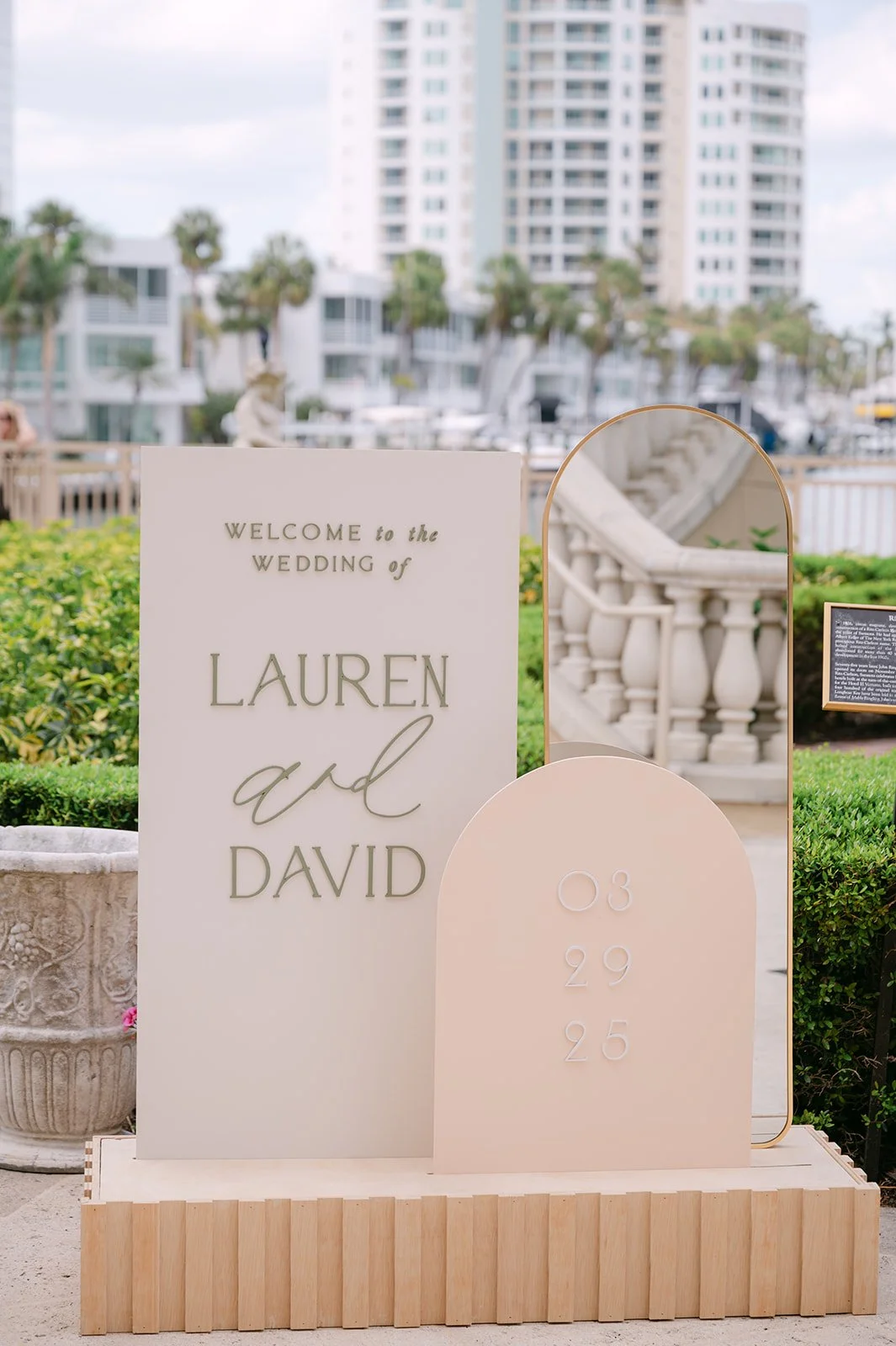
Table Numbers
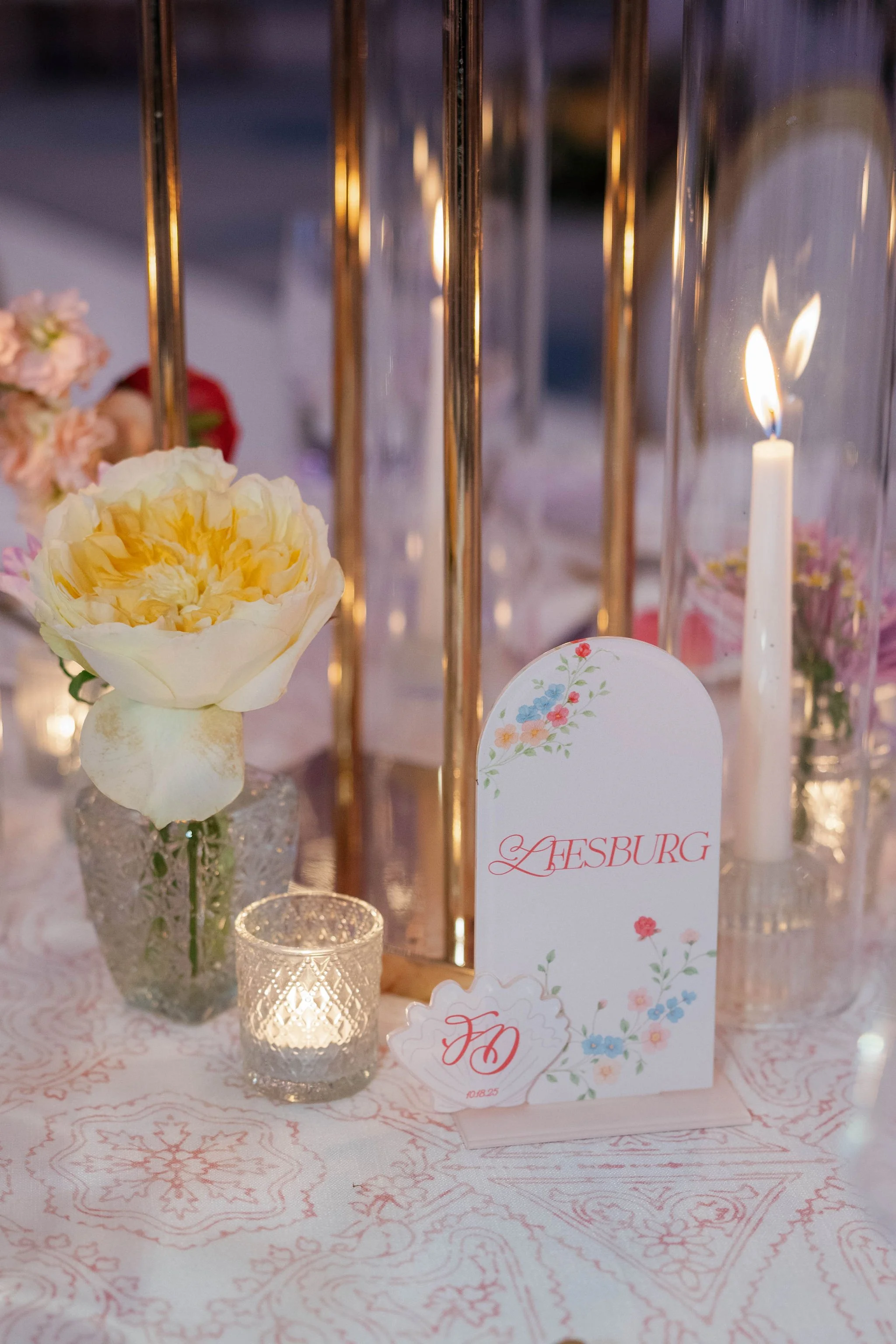
Table numbers may seem like a small detail, but they play an essential role in helping guests easily find their assigned table during the Reception. Clear, visible table numbers improve the flow of dinner service and eliminate unnecessary confusion once guests enter the reception space. They also contribute to the overall tablescape, complementing florals, candles, linens, and place settings without distracting from the design. Couples often customize table numbers using acrylic, wood, linen, metal, or other materials that coordinate with the rest of their décor. Some even choose destination-inspired names or meaningful locations instead of traditional numbers to further personalize the experience. While simple in function, table numbers are one of the most important organizational details during dinner.
Menu Cards
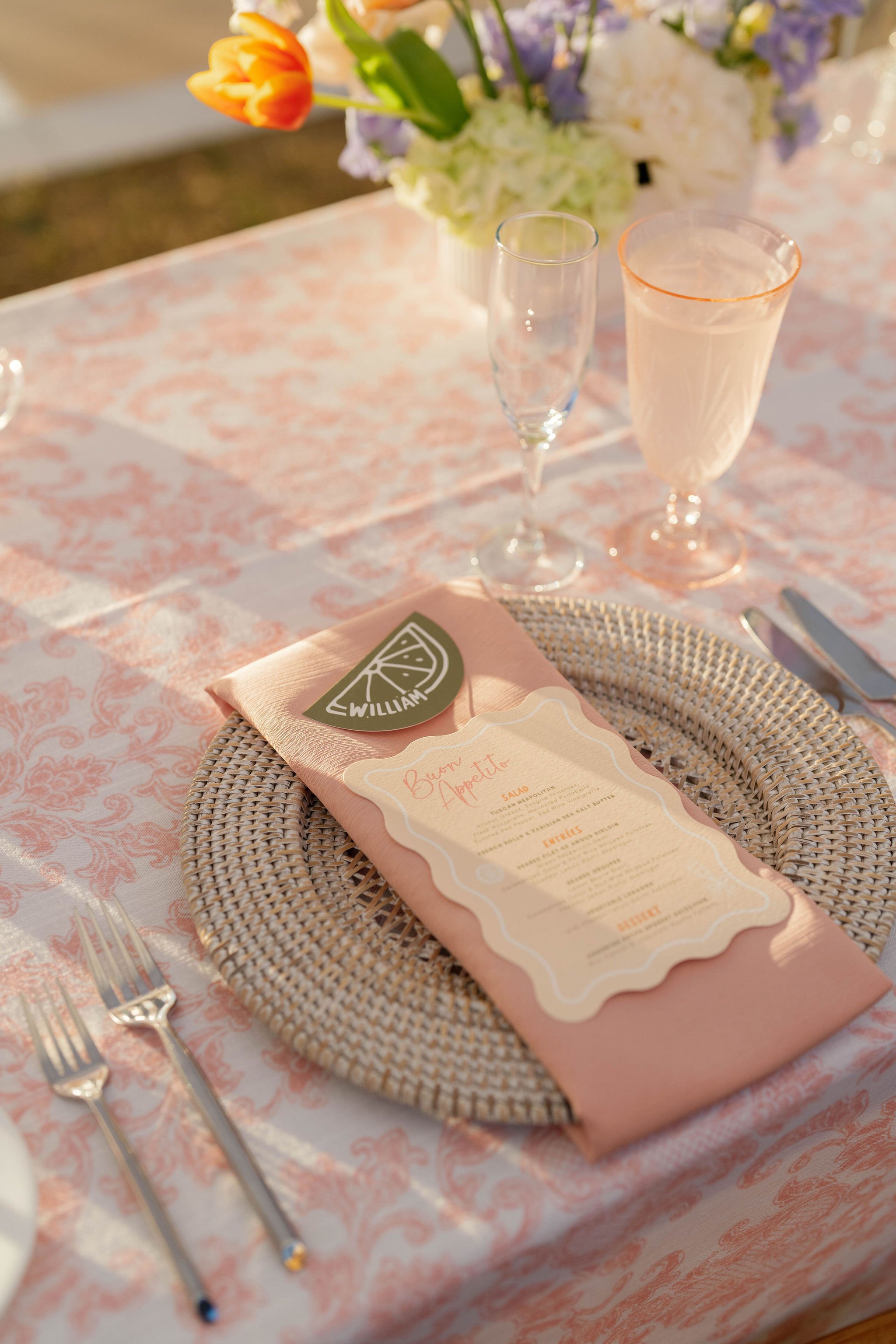
Menu cards elevate each place setting while informing guests about the meal they'll be enjoying throughout the evening. They are especially beneficial for plated dinners, allowing guests to anticipate each course and identify ingredients or dietary accommodations. Beyond their practical purpose, menu cards add another layer of sophistication to the table design by introducing texture, color, and beautifully printed details. Couples often incorporate custom illustrations, monograms, wax seals, ribbons, or specialty printing techniques to make menus feel like part of the overall design. They also serve as a keepsake that guests can take home after the celebration. A thoughtfully designed menu card transforms a functional item into another meaningful design element.
Place Cards
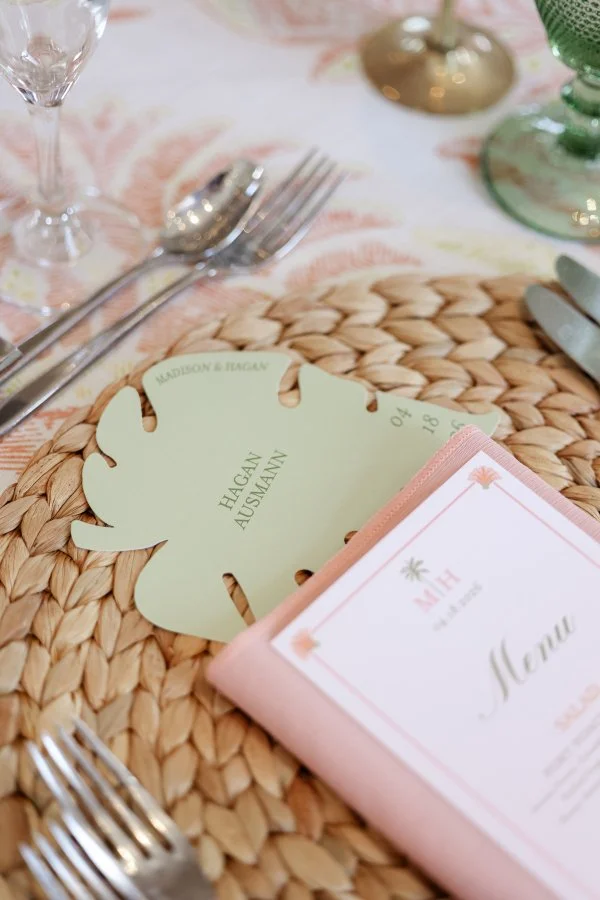
Although often confused with escort cards, place cards serve a different purpose by assigning guests to a specific seat at their designated table. These cards are placed directly on each place setting, ensuring everyone knows exactly where to sit once they arrive at their table. Assigned seating can help balance conversations, accommodate family dynamics, and simplify meal service, particularly when guests have selected entrée choices in advance. Place cards also allow catering teams to deliver the correct meals efficiently when dietary restrictions or entrée selections are indicated. From elegant calligraphy to personalized acrylic, wood, or fabric designs, place cards can become a beautiful finishing touch within the tablescape. When paired with menu cards, chargers, and linens, they create a polished and intentional dining experience.
Every piece of wedding day signage serves a purpose, whether it's guiding guests, keeping the celebration organized, or enhancing the overall design. While not every wedding requires every signage element, understanding the role each piece plays allows couples to prioritize what best fits their guest count, venue, and vision. Thoughtful signage creates a seamless experience by eliminating confusion and helping each part of the day flow effortlessly. At the same time, these details contribute to the overall aesthetic, making your wedding feel cohesive, personalized, and beautifully curated. Investing in well-designed signage ensures your celebration is not only stunning to look at but also easy for your guests to enjoy from the moment they arrive until the last dance.